

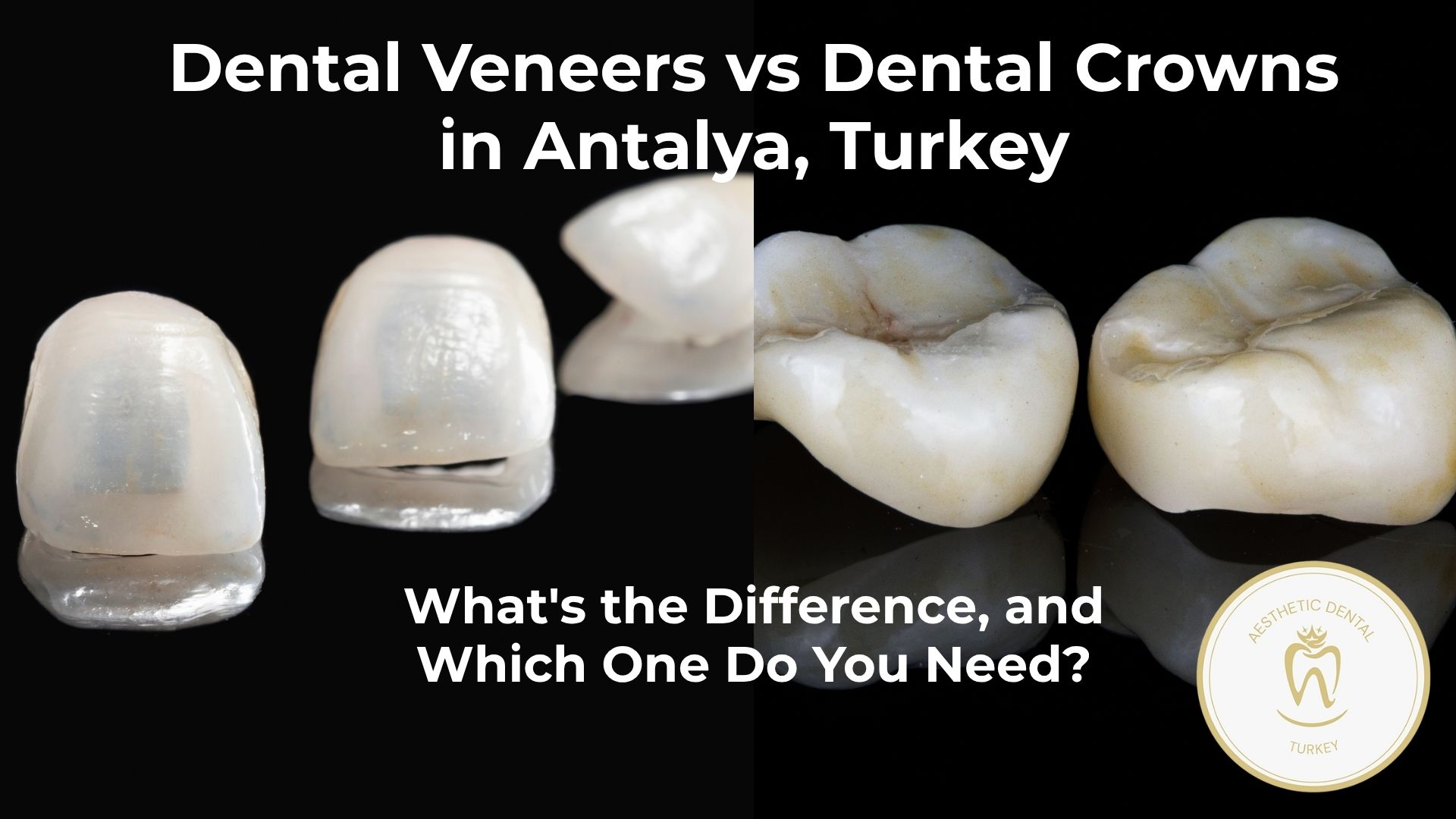
If you've started looking into cosmetic dentistry in Antalya, Turkey, you've probably noticed that "veneers" and "crowns" get used as if they mean the same thing. They don't. They're different treatments, they affect your natural teeth very differently, and choosing the wrong one for your situation is one of the most common reasons people end up unhappy with their smile.
A lot of the "Turkey teeth" stories you've seen online involve patients who thought they were getting veneers. In many cases they actually received full crowns on healthy teeth. So before you book anything, here's what each treatment really involves and how to work out which one you need.
What Is a Veneer?
A veneer is a thin shell, usually porcelain or composite, bonded to the front surface of a tooth. Think of it like a false nail: it changes how the tooth looks from the front, but the tooth underneath stays largely intact.
To fit a porcelain veneer, the dentist usually removes a very thin layer of enamel from the front of the tooth, often less than a millimetre. In some cases, very little or no preparation is needed at all. The back and sides of the tooth aren't touched.
Veneers are mainly a cosmetic treatment. They're used to change:
- the colour of teeth that won't whiten
- small chips or worn edges
- minor gaps
- slightly uneven or misshapen teeth
You can read more about the different options on our porcelain veneers, E-max veneers and laminate veneers pages.
What Is a Crown?
A dental crown is a cap that covers the whole visible part of the tooth: front, back, sides and biting surface. To make room for it, the tooth has to be reduced on every side, so a much larger amount of natural tooth is removed than with a veneer.
That sounds drastic, and on a healthy tooth it is. But crowns aren't a "worse" treatment. They're a restorative treatment, designed for teeth that genuinely need protecting:
- teeth that are badly broken or heavily filled
- teeth that have had root canal treatment
- teeth that are severely worn from grinding
- replacing a tooth on top of a dental implant
- supporting a dental bridge
Modern crowns are usually made from zirconia or porcelain, and they can look extremely natural.
Veneers vs Crowns: The Key Differences at a Glance
| Factor | Veneers | Crowns |
|---|---|---|
| Coverage | Front surface only | Whole tooth |
| Tooth removed | Very little, front only | Significantly more, all sides |
| Main purpose | Cosmetic | Protecting and restoring a damaged tooth |
| Best for | Healthy teeth you want to look better | Weak, broken or root-treated teeth |
| Common materials | E-max, porcelain, composite | Zirconia, porcelain, E-max |
| Reversible? | No | No |
Both treatments are permanent. Once enamel is removed, it doesn't grow back, so the decision is worth taking slowly. If you're worried about the long-term effect on your teeth, see Do Veneers Ruin Your Teeth?
Why Many "Turkey Teeth" Are Crowns, Not Veneers
This is the part a lot of patients wish they'd known earlier.
Some of the cases that made headlines in the UK involved people with fairly healthy teeth who wanted a whiter, straighter smile. Instead of veneers, they were given full crowns, sometimes on 20 or more teeth, and their natural teeth were filed down into small pegs (the "shark teeth" photos you may have seen) to fit them.
Crowns are faster and more forgiving for the clinic, because they hide crooked or uneven teeth completely. But for the patient, it means losing a large amount of healthy tooth structure for a purely cosmetic result. It can also lead to sensitivity, nerve damage and, later, root canal treatment.
This isn't a Turkey problem. It's a planning problem, and it can happen anywhere. We cover the warning signs in more detail in Turkey Teeth Gone Wrong.
The simple rule: if your teeth are healthy, a good dentist should be trying to keep as much of them as possible. If you've been told you need crowns on every tooth for a cosmetic smile, it's worth asking why, and getting a second opinion.
When Veneers Are Usually the Better Choice
Veneers tend to make more sense when:
- your teeth are healthy and free of large fillings
- you mainly want to change colour, shape or small gaps
- your bite is stable
- you don't grind your teeth heavily (or you're willing to wear a night guard)
For most people asking for a Hollywood smile on healthy front teeth, veneers are the more conservative option. If you're curious how a full plan comes together, see What Is a Smile Makeover?
When a Crown Is the Right Call
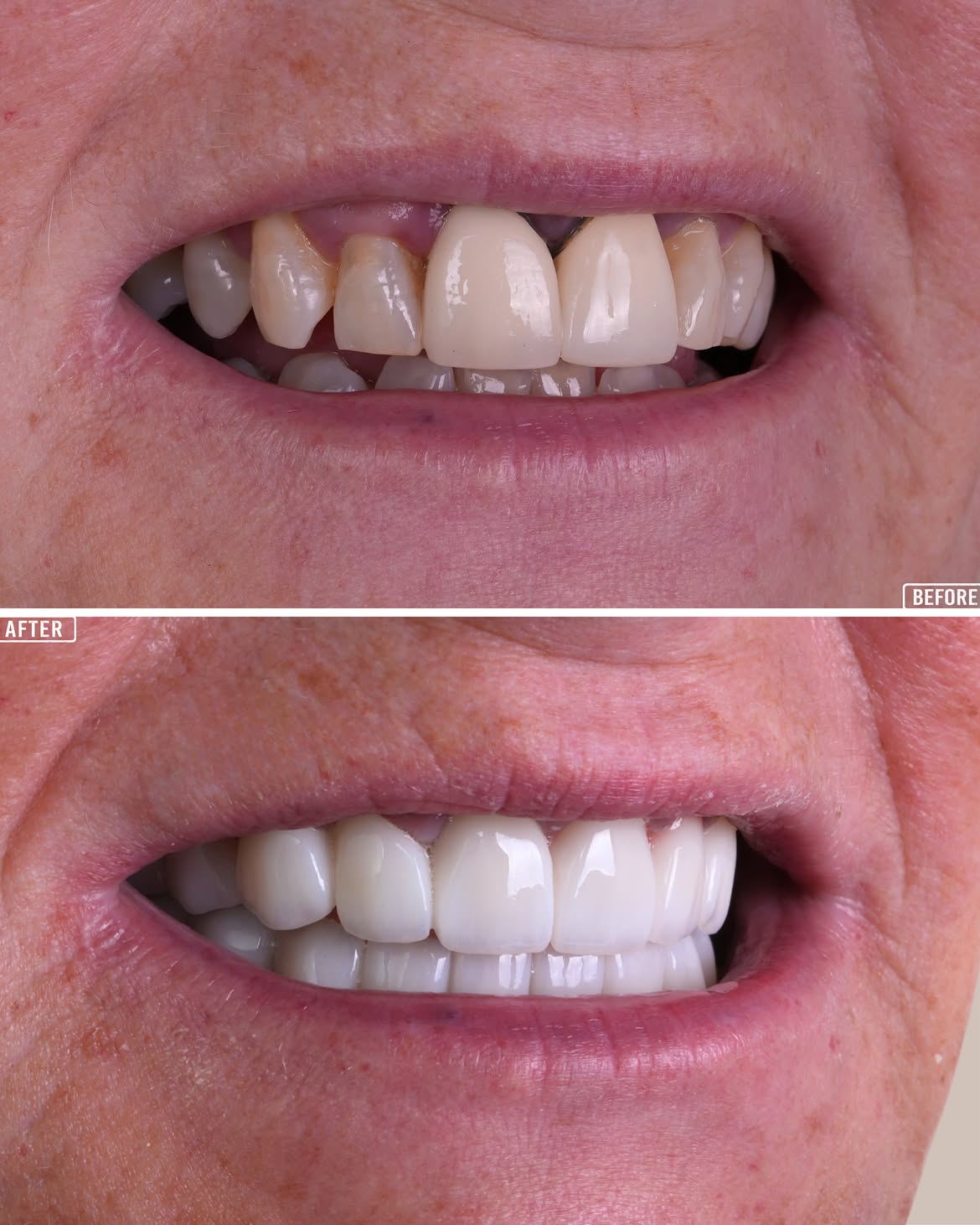
A crown is often the safer choice when:
- a tooth has a large filling and not much natural structure left
- the tooth is cracked or has broken
- you've had a root canal on that tooth
- teeth are very worn down
- you need a tooth replaced on an implant
In these cases, a veneer wouldn't have enough healthy tooth to bond to, and it could fail. A crown protects what's left.
Can You Have Both Veneers and Crowns?
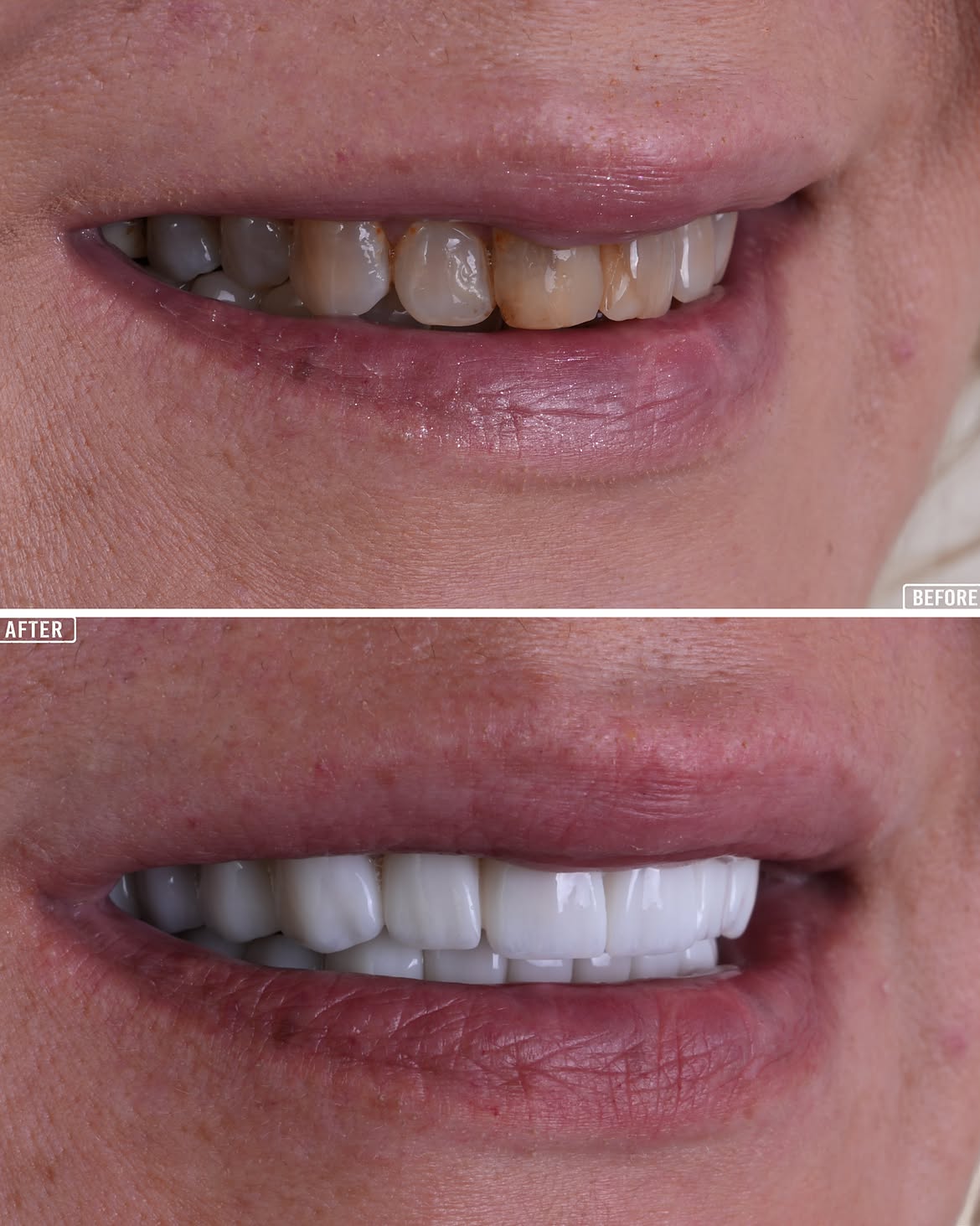
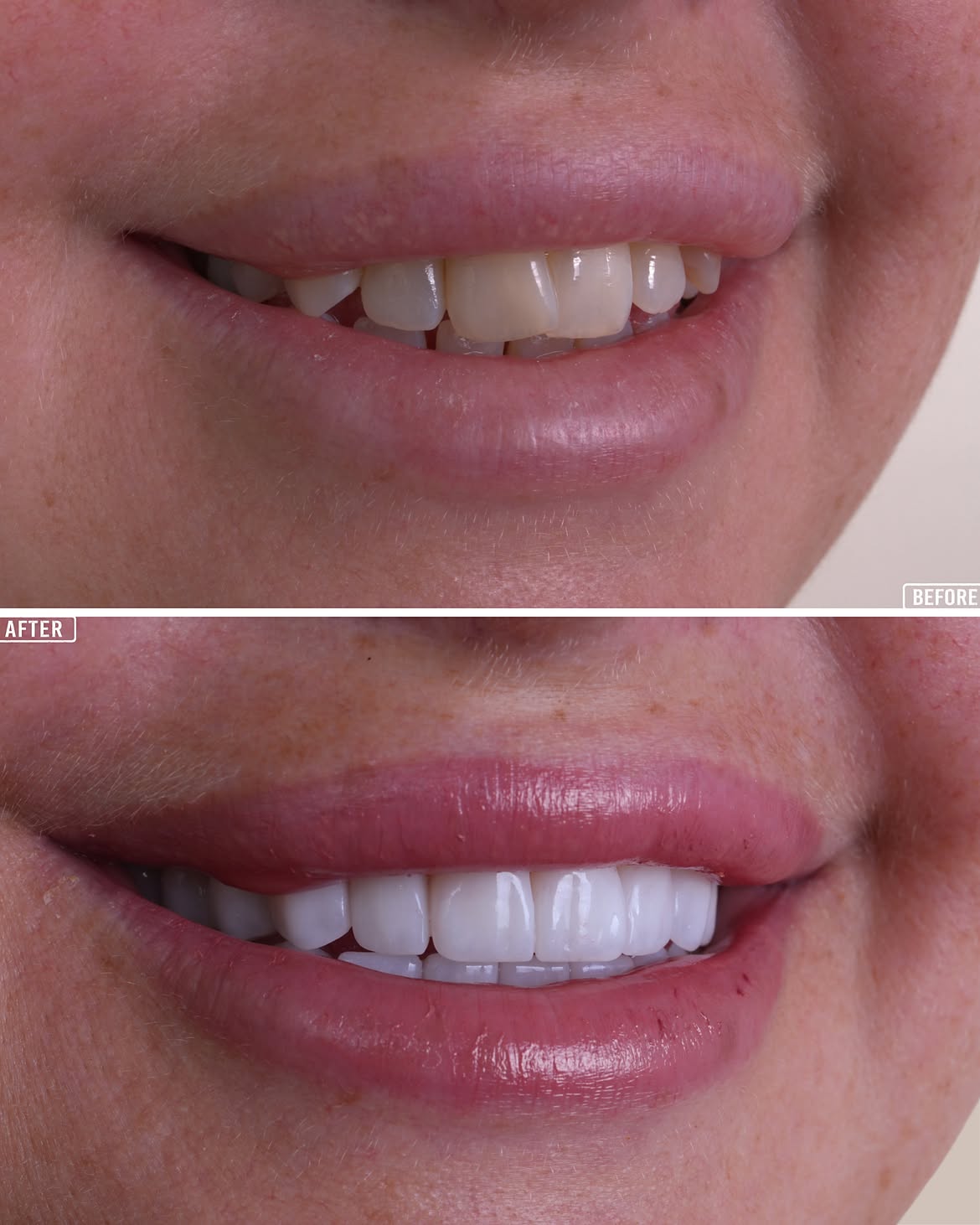
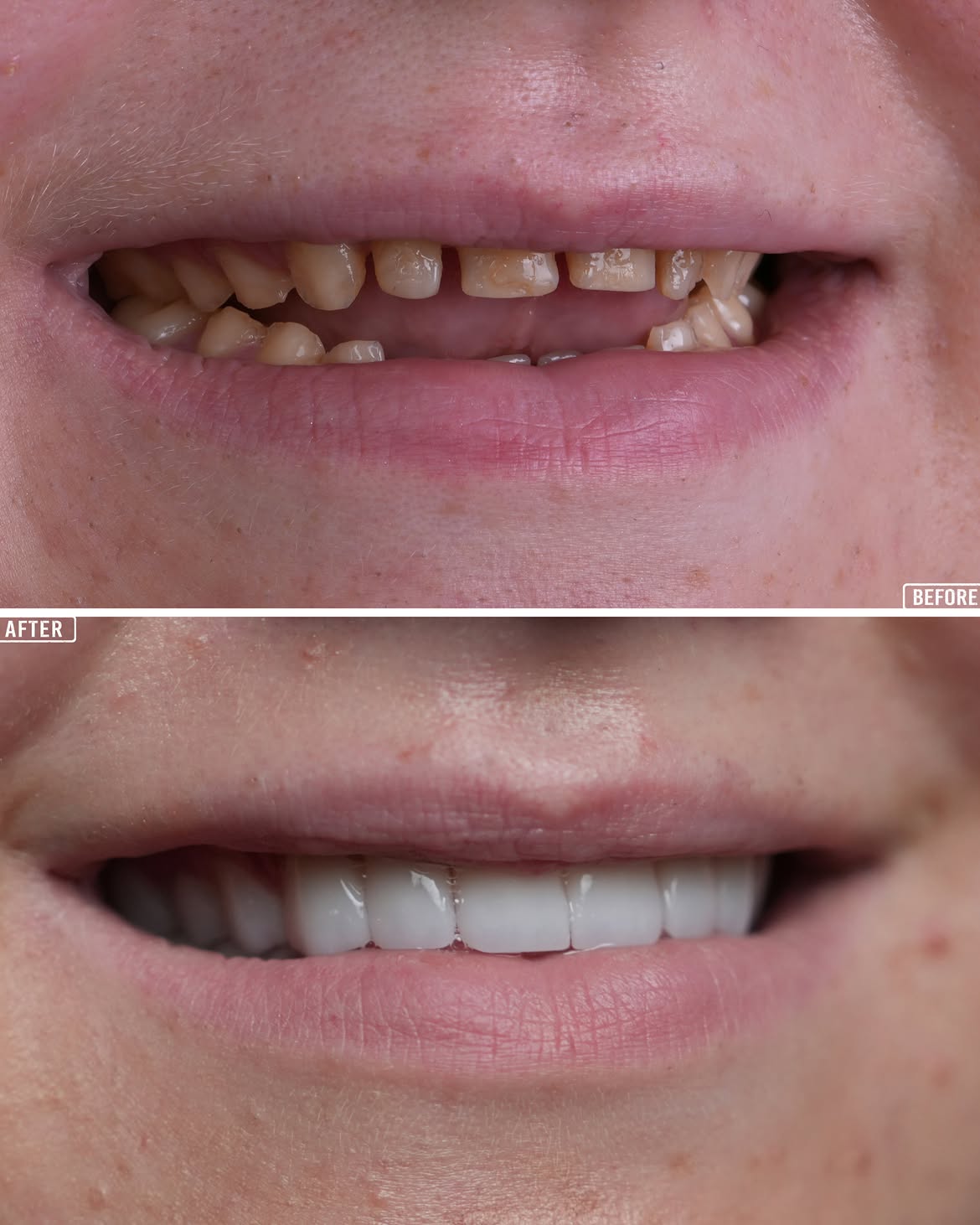
Yes, and it's very common. Plenty of smile makeovers use veneers on the healthy teeth and crowns only where a tooth is weak or already heavily restored. The materials and shade are matched so the finished smile looks uniform.
That kind of mixed plan is usually a good sign. It means the dentist has looked at each tooth individually rather than applying one treatment to everything.
Materials: E-max, Porcelain and Zirconia
- E-max (lithium disilicate) is a strong glass-ceramic with excellent translucency. It's a popular choice for veneers on front teeth because it reflects light much like natural enamel.
- Porcelain has a long track record and gives a natural-looking result.
- Zirconia is extremely strong, which makes it well suited to crowns, back teeth and implant restorations. Newer zirconia types are also more translucent than older ones.
- Composite veneers are cheaper and can be done in a single visit, but they stain and chip more easily and need replacing sooner.
How Long Do Veneers and Crowns Last?
With good care, porcelain veneers typically last around 10 to 15 years, and often longer. Crowns have a similar lifespan, and zirconia crowns can last longer still. Your habits make a big difference: grinding, biting hard objects and poor oral hygiene shorten the life of both.
For more detail, see How Long Do Veneers Last? and How Long Does a Zirconium Crown Last?
Veneers and Crowns Cost in Antalya, Turkey
Veneers and crowns are usually priced per tooth, and the final cost depends on the material and how many teeth are involved.
| Treatment | Indicative price per tooth (GBP) |
|---|---|
| Composite veneers | £85–£170 |
| Porcelain and E-max veneers | £155–£300+ |
| Zirconia crowns | Individual quote after review of your photos or X-rays |
These prices are a general guide. Your final quote depends on the material, the condition of each tooth and your treatment plan.
When comparing prices, check what's included. A low headline price per tooth can look very different once consultations, X-rays, temporary teeth and follow-ups are added. Our guide to veneer types and costs in Antalya goes into more detail.
How Long Do You Need to Stay in Antalya?
For most veneer or crown cases, treatment is done in one trip of around a week. The first visit covers the examination, digital smile design and tooth preparation, with temporaries fitted. The final restorations are then made in the lab and fitted a few days later, after you've checked the shape and colour.
If implants or gum treatment are part of the plan, you may need two trips. You can find practical information on our travel and accommodation page.
Questions to Ask Your Dentist Before You Decide
- Am I getting veneers or crowns on each tooth, and why?
- How much of my natural tooth will be removed?
- Can I see a digital preview or mock-up first?
- Which material are you using, and which lab makes it?
- What happens if a veneer or crown chips or comes off after I go home?
A good clinic won't mind any of these questions.
Frequently Asked Questions About Veneers and Crowns in Turkey
Do veneers or crowns hurt?
Both are done under local anaesthetic, so you shouldn't feel pain during treatment. Some sensitivity for a few days afterwards is normal, and is usually more noticeable with crowns because more tooth is removed.
Can veneers be replaced with crowns later?
Yes. If a veneered tooth is damaged later on, it can usually be converted to a crown. Going the other way, from crown back to veneer, isn't possible, because the tooth has already been reduced.
Are crowns stronger than veneers?
Generally yes, because they cover the whole tooth. But strength isn't the only factor. On a healthy tooth, keeping more natural enamel is often the better long-term choice.
Can I whiten veneers or crowns?
No. Neither changes colour with whitening. If you want to whiten your natural teeth, do it before treatment so the shade can be matched.
Which looks more natural, veneers or crowns?
Both can look completely natural when they're well planned. The result depends far more on design, shade choice and the lab's work than on the type of restoration.
The Bottom Line
Veneers are for healthy teeth you want to look better. Crowns are for teeth that need protection. Many of the worst cosmetic dentistry stories come from that line being ignored.
If you're not sure which applies to you, send us your photos or recent X-rays. We'll tell you honestly what each tooth needs, and we won't suggest crowns on teeth that don't need them.